How to Protect Your Card Information When Shopping Online
Shopping online makes everyday purchases more convenient. From clothing and electronics to travel reservations and digital services, millions of transactions take place through websites and mobile applications.
However, entering credit card or debit card information online also introduces security risks.
Fraudulent stores, phishing messages, compromised accounts, and stolen payment credentials can expose shoppers to unauthorized transactions and financial losses.
Learning how to protect your card information online is an important part of making safer purchasing decisions.
Fortunately, you don’t need advanced technical knowledge to reduce common risks.
By understanding how online payment security works and following a few practical habits, you can make more informed decisions before, during, and after checkout.
Why Is Protecting Card Information Important?
Payment cards contain information that may be valuable to criminals, including account numbers, expiration dates, and security credentials.
When these details are compromised, fraudsters may attempt unauthorized purchases or use them in additional scams.
The Canadian Centre for Cyber Security warns that fraudulent websites, advertisements, and messages can be designed to steal financial information or compromise online shopping accounts.
Criminals may also impersonate legitimate retailers, banks, or delivery companies.
While payment networks and financial institutions use security systems to detect suspicious activity, no technology eliminates every risk.
That is why consumer awareness remains essential.
1. Shop Only on Websites You Can Verify
Before entering payment information, take a moment to investigate the retailer.
A professional-looking website is not necessarily trustworthy.
Fraudulent stores may copy product photographs, use convincing designs, and advertise discounts that appear unusually attractive.
How to Check an Online Store
Look for clear contact information, a realistic return policy, and consistent business details.
Search independently for the retailer’s name alongside terms such as “reviews,” “complaints,” or “scam.”
Consider whether customer feedback comes from credible sources rather than relying exclusively on testimonials published by the seller.
For unfamiliar merchants, compare the website address with the official address listed through reliable channels.
Be cautious if the store pressures you to complete a purchase immediately or accepts only difficult-to-reverse payment methods.
2. Check the Website Address Before Paying
A secure connection is an important part of online shopping.
Websites using HTTPS encrypt information transmitted between your browser and the website.
You can normally identify HTTPS at the beginning of a website address.
However, HTTPS does not guarantee that a retailer is legitimate.
The US Federal Trade Commission explains that fraudulent websites can also use encrypted connections.
What Should You Look For?
Check that the website address is spelled correctly.
Fraudsters may use domain names that look similar to those of established retailers.
For example, a fake website might include additional characters or an unusual domain extension.
Avoid opening payment pages through suspicious messages or advertisements when you cannot verify their destination.
Whenever possible, access the retailer by entering its known official website address directly.
3. Use Strong Passwords for Shopping Accounts
An online shopping account may contain saved addresses, order histories, and payment methods.
If someone gains access to that account, they may be able to misuse the information or attempt unauthorized purchases.
Use a strong, unique password for every important online account.
Avoid reusing the same password across shopping, banking, and email services.
A reputable password manager can help generate and store unique passwords.
Why Password Reuse Is Dangerous
Imagine using the same password for a shopping website and your primary email account.
If one service experiences a security breach, criminals may attempt to use the stolen credentials elsewhere.
Using different passwords limits this risk.
Also, change passwords promptly if you discover that an account may have been compromised.
4. Enable Multifactor Authentication
Multifactor authentication, often called MFA or two-factor authentication, adds another verification step to account access.
Depending on the service, this may involve a passkey, authentication application, security key, or verification code.
The Canadian Centre for Cyber Security recommends enabling phishing-resistant authentication where available.
Why Does MFA Matter?
A stolen password may not be sufficient to access an account protected by an additional authentication factor.
However, not every MFA method provides the same protection.
Security keys and properly implemented passkeys can provide stronger resistance to phishing than ordinary text-message codes.
Never share one-time verification codes with people who contact you unexpectedly.
Only approve authentication requests you personally initiated.
5. Consider Using Virtual Cards for Online Purchases
Some banks and financial technology providers offer virtual cards.
These cards use digital payment credentials that may differ from those printed on your physical card.
Depending on the provider, virtual cards can include spending limits, merchant restrictions, or temporary card numbers.
Potential Benefits
A merchant-specific virtual card may limit how stolen credentials can be reused.
A spending limit may reduce exposure if unauthorized transactions are attempted.
Some providers also allow customers to freeze or replace virtual credentials through an application.
However, these features are not universal.
A virtual card without additional controls can still be compromised, and it does not protect against every scam.
Before using one, confirm the fees, transaction restrictions, and protections offered by your financial institution.
6. Understand Digital Wallet Security
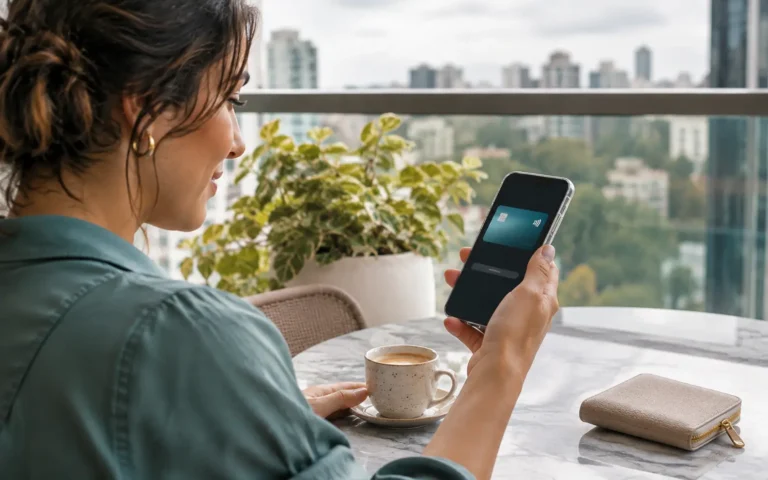
Digital wallets can support online shopping without requiring customers to manually enter their card number during every transaction.
Some wallets use tokenization, a technology that substitutes sensitive payment information with alternative credentials.
This can reduce the exposure of original card details during supported payments.
However, digital wallets are not completely immune to fraud.
Someone who gains access to an insufficiently protected account or persuades a customer to approve a fraudulent payment may still cause financial harm.
Protect your device with a strong passcode and use the authentication options offered by your wallet provider.
7. Be Careful When Using Public Wi-Fi
Public wireless networks are convenient, but they may introduce additional security risks.
The US Federal Deposit Insurance Corporation advises consumers to exercise caution when making purchases or accessing financial services on unsecured networks.
Safer Payment Habits
Whenever practical, use a trusted home connection or mobile data for sensitive transactions.
Avoid entering card information on public or shared computers.
Keep your browser and device updated.
Remember that HTTPS protects data in transit even on public Wi-Fi, but it does not protect against every risk, including phishing or compromised devices.
A VPN may provide additional network privacy in some situations, but it does not automatically make a fraudulent retailer safe.
8. Avoid Saving Card Details on Unfamiliar Websites
Many online retailers allow customers to save payment cards for future purchases.
This can make checkout faster, but it also means you are relying on the merchant or payment provider to manage stored credentials securely.
Consider whether saving your card is necessary.
For retailers you use infrequently, entering payment details only when needed may be preferable.
If you already have saved payment methods on accounts you no longer use, review whether they can be removed.
Never send complete card numbers, security codes, or authentication credentials through ordinary email or chat messages.
Credit Card vs. Debit Card: Which Offers Better Protection?
Both credit and debit cards can include fraud protection, depending on the issuer, card network, and local regulations.
However, the practical consequences of unauthorized payments may differ.
| Security consideration | Credit card | Debit card |
|---|---|---|
| Source of payment | Credit account | Linked funds |
| Unauthorized transactions | May affect available credit | May affect available account funds |
| Dispute procedures | Depend on issuer and law | Depend on issuer and law |
| Fraud monitoring | Commonly available | Commonly available |
| Transaction alerts | Often available | Often available |
| Consumer liability | Depends on applicable rules | Depends on applicable rules |
A credit card may provide a practical advantage when fraudulent charges do not immediately reduce money available in your bank account.
However, no payment method guarantees reimbursement for every transaction.
Check your financial institution’s specific fraud policies before relying on any protection.
9. Recognize Common Online Payment Scams
Understanding common scams can help you identify suspicious activity before entering payment information.
| Scam type | Warning sign | Safer response |
|---|---|---|
| Fake online store | Unrealistic prices and questionable business details | Verify the retailer independently |
| Phishing email | Urgent request for card details | Avoid the link and use official channels |
| Fake delivery notification | Unexpected payment required to release a parcel | Check with the delivery company directly |
| Refund scam | Request for banking codes to receive money | Contact the retailer through its official website |
| Account verification scam | Message demanding immediate security confirmation | Open your banking application independently |
| Fake customer support | Unsolicited request for remote device access | End contact and find verified support details |
The FTC warns that scammers frequently impersonate legitimate companies and create convincing shopping advertisements.
Do not assume that a message is authentic simply because it contains a familiar company logo.
10. Turn On Payment Notifications
Transaction notifications can help you identify suspicious activity quickly.
Many financial institutions offer alerts through their mobile applications, email, or text messages.
Depending on the provider, notifications may include card purchases, international transactions, unusual spending, and payment failures.
Consider activating alerts for purchases and account activity.
When an unfamiliar transaction appears, check your statement and contact your issuer through an official channel.
Prompt reporting is important because dispute deadlines and liability protections may depend on applicable rules.
What Should You Do if Your Card Information Is Stolen?
If you suspect that someone has accessed your payment information, take action promptly.
Step 1: Contact Your Card Issuer
Use the official banking application, website, or telephone number provided by your financial institution.
Explain that your payment information may have been compromised.
Step 2: Freeze or Block the Card
If your provider offers card-locking controls, consider using them while the issue is investigated.
The bank may recommend replacing the card.
Step 3: Review Recent Transactions
Identify unfamiliar purchases and document the dates, amounts, and merchant names.
Step 4: Report Unauthorized Activity
Follow your issuer’s dispute or fraud reporting procedure.
Keep relevant reference numbers and communications.
Step 5: Secure Your Accounts
Change compromised passwords, enable stronger authentication, and review devices that have access to your accounts.
Step 6: Monitor for Additional Problems
Continue reviewing financial activity and consider any identity protection measures available in your country.
Do not assume that cancelling a card automatically secures every related online account.
A Practical Online Payment Safety Checklist
Before completing your next online purchase, review the following precautions:
- Verify the retailer’s identity and website address.
- Confirm that checkout uses an encrypted connection.
- Review the full purchase price and return conditions.
- Use a trusted payment method with protections you understand.
- Avoid entering card details on shared or untrusted devices.
- Use strong passwords and enable multifactor authentication.
- Consider virtual card controls when supported.
- Never share security or verification codes.
- Keep receipts and order confirmations.
- Review card statements and report suspicious transactions promptly.
These measures cannot guarantee complete protection, but they can reduce common security risks.
Important Considerations
Online payment security involves both technical protections and consumer behavior.
The Payment Card Industry Data Security Standard (PCI DSS) establishes security requirements for organizations that handle payment card information.
However, consumers should not assume that every website claiming to follow security standards has been independently verified.
Fraud reimbursement rights, chargeback procedures, payment regulations, and account protections vary internationally.
Also, be cautious of companies promising completely fraud-proof cards, guaranteed refunds, or absolute protection from online scams.
No payment technology eliminates every form of financial risk.
Frequently Asked Questions (FAQ)
Is it safe to enter card details online?
It can be reasonably secure when using a reputable retailer, an encrypted checkout, and appropriate account protections. However, no transaction is entirely risk-free.
Can someone steal my card information from a website?
Yes. Fraudulent websites, compromised merchants, malware, and phishing attempts can expose payment information.
Are virtual cards safer for online shopping?
Some virtual cards offer additional controls that may reduce certain risks. Protection depends on the provider and available features.
Does HTTPS mean a shopping website is legitimate?
No. HTTPS indicates an encrypted connection, but fraudulent websites can also use encryption.
Should I save my card information on shopping websites?
Consider doing so only with services you trust and when the convenience justifies the additional exposure. Review saved cards regularly.
What should I do if I notice an unauthorized transaction?
Contact your financial institution promptly, report the transaction, and follow its fraud investigation procedures.
Is a credit card safer than a debit card?
Credit cards may offer practical advantages in some situations, but fraud protections and consumer rights depend on local rules and card agreements.
Can a digital wallet protect my payment information?
Some wallets use tokenization and device authentication to reduce exposure of card details, but they cannot eliminate all security risks.
Final Thoughts
Protecting your card information online requires more than selecting a secure payment method.
Checking retailers, using strong authentication, monitoring transactions, and recognizing common scams all contribute to safer online shopping.
Virtual cards and digital wallets can provide useful security features, but they should complement responsible financial habits rather than replace them.
Before entering payment information, take a moment to verify the website and understand the transaction.
The safest online shopping habits begin before checkout and continue after the purchase is completed.
Disclaimer
This article is provided for general educational and informational purposes only. It does not constitute personalized cybersecurity, financial, banking, legal, or payment security advice.
Fraud protections, chargeback procedures, financial regulations, and consumer rights vary by country, card network, and financial institution.
No security technique or payment method guarantees complete protection against fraud, data breaches, or financial loss.
Readers should contact their financial institutions and appropriate local authorities when dealing with suspected unauthorized transactions.
Last reviewed: November 14, 2026.